



This news section is where you can find all the latest and up-to-date information on MS Research and Relief Fund.
Art Therapy is a form of psychotherapy that uses art media as its primary mode of communication. It uses the creative process of making art to improve and enhance the physical, mental and emotional well-being of individuals of all ages. It is based on the belief that the creative process involved in artistic self-expression helps people to resolve conflicts and problems, develop interpersonal skills, manage behaviour, reduce stress, increase self-esteem and self-awareness, and achieve insight. Art therapy requires no artistic ability, as one person said "It is the process that is important, not the product". An Art Therapist offers guidance and support and the opportunity to explore issues of concern using a variety of art materials.
Art therapy integrates drawing, painting, sculpture, etc. with models of psychotherapy and counselling. Art therapy is used with children, adolescents, adults, groups, and families to assess and treat things such as: anxiety, depression, family and relationship issues, abuse and domestic violence, emotional difficulties related to disability, trauma and loss, neurological problems; and psychosocial difficulties related to medical illness. Art therapy programs may be found in a number of settings including hospitals, clinics, community agencies, wellness centres, educational institutions, businesses, and private practices.
Art therapy offers an opportunity to explore painful thoughts and feelings related to any of the problems or conditions outlined above, in a supportive environment. It involves using a wide variety of art materials, for example paints, pastels and clay, to create a visual representation of thought and feelings. Art Therapy can be an individual activity but is often used very successfully in group situations
Art therapists are master’s level professionals who hold a degree in art therapy or a related field. Educational requirements include: theories of art therapy, counselling, and psychotherapy; ethics and standards of practice; assessment and evaluation; individual, group, and family techniques; human and creative development; multicultural issues; research methods; and practical experiences in clinical, community, and/or other settings. Art therapists are skilled in a variety of art modalities (drawing, painting, sculpture, and other media) for assessment and treatment.
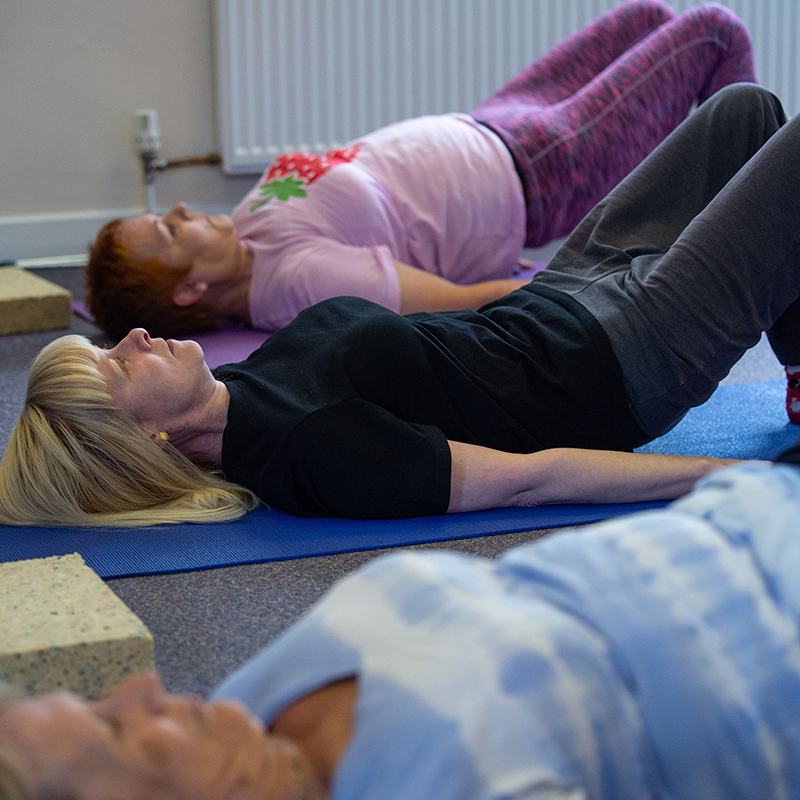
Art therapy can certainly be beneficial on an individual basis but is also very successful in group settings. This may help explain why virtually everyone attending our Art class feels it is therapeutic. If you would like to visit the Art Class just contact Benmar House for more details. FOOD AS MEDICINENew research suggests that caffeine, green tea and cherries may guard against multiple sclerosis, cancer and cardiovascular troubles, respectively.All three findings, which confirm the healthy properties of these foods, were presented last month at the Experimental Biology 2008 meeting in San Diego, America. Caffeine appears to help ward off multiple sclerosis, at least in a preliminary animal study. Mice given caffeine were 75 percent less likely to develop the animal model of MS than those not given it, said study senior author Dr. Margaret Bynoe, an assistant professor of microbiology and immunology at Cornell University School of Veterinary Medicine, in New York. "The 25 percent who got it got mild cases," she said, although she did say that the research is preliminary and the trials were in mice that had the animal model of MS. Why does caffeine help? Caffeine is known to block a compound called adenosine. "Inhibiting adenosine prevents the infiltration of lymphocytes (a type of white blood cell involved in immune system response) into the central nervous system," Dr. Bynoe explained. "If the lymphocytes cannot get in, you cannot get the inflammation characteristic of MS. The inflammatory response is what causes the damage to the myelin covering the nerve cells." Dr. Bynoe believes her team is the first to demonstrate this mechanism. In the mice given caffeine that was the equivalent of 6 to 8 cups of coffee a day for humans, "there was a reduction in the inflammation, the pathology and a reduction in the brain pathology," Dr. Bynoe said. Adenosine plays a crucial role in many body processes, including energy transfer, the promotion of sleep and the suppression of arousal. Caffeine can bind to the same receptors as ine, preventing the adenosine from attaching to cells in the central nervous system. The new finding is "certainly deserving of further study," said Dr. John Richert, executive vice president of research and clinical programs for the National Multiple Sclerosis Society. But he added "It's important to remember that the animal model of MS is not MS, and many potential treatments that have worked on the animal model have not worked on MS." Source: The Washington Post April 2008 ‘CAN DO IT’ FROM B & Q B & Q have launched their new ‘Can Do’ range of specially selected products for making life easier around the home and garden.The range includes items such as an Independent Living walk in bath, electronically operated height adjustable kitchens and specially made gardening tools.They are marked with a ‘Can Do’ logo in stores where catalogues are available. These can also be downloaded from their website www.diy.com CAN DRINKING WORM EGGS TREAT MULTIPLE SCLEROSIS????In America some people with MS are using worm eggs will soon test an unusual treatment: They'll drink a cocktail of worm eggs, which will hatch inside their bodies . Doctors say that the low-grade infection of worms, harvested from pigs, can help regulate faulty immune systems. "The yuck factor is hard to get over," acknowledged Dr. John Fleming, the neurologist who plans to launch a study of worm therapy in April. "But the idea has scientific merit." Patients with other conditions, such as irritable bowel syndrome, have tried worm therapy elsewhere. It has eased symptoms without causing known side effects. Many scientists believe the prevalence of such autoimmune conditions: including multiple sclerosis, allergies, asthma and a form of diabetes; is partly explained by a "hygiene hypothesis." Sanitary environments in developed countries have led to more of the diseases, the theory goes, because people's immune systems aren't properly trained by exposure to germs and parasites. The worm therapy offers a crash course of such training, Dr. Fleming said. "It stimulates the immune system in a good way." He said the concept is similar to eating yogurt, which contains helpful bacteria that regulate digestion. In the study, five patients with MS will sip a sports drink-like liquid every two weeks for three months. Each cup will contain 2,500 eggs of the whipworm, a tiny organism that commonly lives in humans and animals. Though the human whipworm rarely causes illness, the study uses a pig version that is benign in people, Dr. Fleming said. The eggs hatch into larvae, the size of an eyelash that sticks to the inside of the intestine. In killing the larvae, the body unleashes an extra dose of regulatory T cells, which dampen overactive immune cells. Existing MS treatments, also try to block overactive immune cells. But with the worm therapy, "instead of knocking down the bad parts of the immune system, we're pushing up the good parts," Dr. Fleming said. He will check to see if the worm therapy reduces the frequency or severity of flare-ups. Patients will undergo monthly MRI scans to see if fewer lesions develop in the brain and spinal cord. If the study is successful, 15 patients will be enrolled in a follow-up trial for a year. Then a larger study might be launched comparing worm therapy with a placebo. Worm therapy is a promising alternative treatment for the 400,000 Americans with multiple sclerosis, said Dr. John Richert, vice president for research and clinical programs at the National Multiple Sclerosis Society (of America), which is funding Dr. Fleming's study. "We need to push for the development of new and safe medications," Richert said. "This is a direction that has a strong chance of bearing fruit." Dr. Fleming admits he was sceptical when he first heard of worm therapy - "This idea seems outrageous at first," Fleming said. "But many good, new ideas do." Source: MSRC News (07/03/08) WARNING ON ROGUE TRADERSThe British Healthcare Trades Association (BHTA) has condemned the practices of salesmen in an adjustable bed company and a scooter company. They have been pressurising elderly and disabled people into buying products they didn’t need or want. They advise people to go to a registered BHTA member company which will give members of the public the security of dealing with a company that is committed to providing high standards of service, as set out in their code of practice. BERWICKMS Research and Relief Fund are working in partnership with the MS Society, Northumberland Care Trust, Northumbria Healthcare NHS Foundation Trust, the MS Society Scotland, and Northumberland FISHNET’s on an MS Outreach Therapy and Advice Service at Berwick Infirmary. The project helps to give people affected by Multiple Sclerosis in North Northumberland access to complementary therapies, an MS Specialist Nurse and to a Physiotherapist. Informative presentations and demonstrations are also available on a fortnightly basis. For further information contact MS Research and Relief Fund on 01670 505 829 or Jane Metcalfe, MS Specialist Nurse on 01289 356686. NEWCASTLE UPON TYNEMSRRF are delighted to be working in partnership with the Community MS Team, the MS Society and people affected by MS in Newcastle upon Tyne. At Walkergate hospital an MSRRF therapist provides complementary therapies every Tuesday morning. At the Lemington Centre in the West End of the city we are working in partnership with the MS Society and people affected by MS to provide a gentle exercise class and complementary therapies every Thursday afternoon from 1pm to 4pm. EXERCISE CLASSESWe provide gentle exercise classes in Morpeth, Newcastle and Durham. All people affected by MS are welcome. At Benmar House in Morpeth the class is held every Friday morning The class at Lemington is at 1pm every Thursday afternoon COMPLEMENTARY THERAPIESWe now have 5 complementary therapists at Benmar house providing therapies by appointment from 9am – 5pm every weekday. Complementary therapies are also available by appointment at: Belmont Parish Hall, Durham every Tuesday morning. Walkergate Park hospital, Newcastle upon Tyne, every Tuesday morning. The Millennium Phab club, Jarrow every Wednesday. The Lemington Centre, Newcastle upon Tyne, every Thursday afternoon. Berwick Day Hospital, Berwick, every 2nd and 4th Monday of the month. Morpeth, Durham, and JarrowVibrogymEarlier this year, we opened a brand new Fitness Lounge, complete with toning tables and a passive/active exercise bike. However, chief amongst the new equipment, is the Vibrogym. Dutch Authorities Ban Rotterdam Stem Cell TreatmentMSRRF have received many inquiries about stem cell treatment from people with (MS). Our advice has always been that people should gather as muchinformation on stem cell treatments as they possibly can and speak to their doctor and/or consultant before making any decisions. We have also advised that research on stem cell treatment is still in its infancy and it may perhaps be better to wait. The MS Society have highlighted this with news that on October 2nd 2007 the Dutch authorities ordered (Preventive Medicine Company commonly) (PMC) to stop performing stem cell treatments. “The Dutch health care inspectorate has ordered the PMC clinic in Rotterdam to stop performing stem cell treatments for MS and other conditions. In a statement it said it had concluded PMC was not providing responsible care, because it is unable to demonstrate the origin, suitability and safety of the stem cells it used. This jeopardised the health and safety of patients. Among other things, it exposed patients to the risk of infection with HIV orCreutzfeldt-Jacob Disease, allergic reactions, malignant tumours or rejection reactions.” On Friday 29 September, the Inspectorate received a notification from the Havenziekenhuis hospital in Rotterdam about a patient who had to be admitted with serious complications following stem cell treatment at the clinic. The patient had a serious acute allergic reaction after the administering of stem cells. After being treated, the patient was allowed to return home. Said the Inspectorate: “Under the Dutch Care Institutions (Quality) Act, the PMC is required to provide responsible care. This means care of a good level that is efficient, effective and suitable for the patient. In the case of stem cell treatment, the PMC is obliged to demonstrate through documentation the safety of the entire stem cell supply chain from donor to recipient. To date, the PMC has been unable to present any documentation to the Inspectorate concerning the origin, the suitability for the intended application and the safety of the products that are used.” The weeklong-order took effect at 5pm on Monday 2 October and the Inspectorate is expected to ask the Minister of Health, Welfare and Sport to renew it. The Inspectorate said it was also considering bringing disciplinary charges against the physicians who work at the PMC. |
A company registered as The Multiple Sclerosis Research and Relief Fund in
England, No. 795584